With a limited budget, it is tempting to focus everything on immediate conversion. But most people are not ready to buy when they see the first ad. A three-stage lead funnel, capture, nurture and convert, makes it possible to make use of those who have not decided yet without spending much.
The essentials in a definition
The three-stage lead funnel (capture, nurture, convert) works well on a limited budget because it forces you to do little, but well: a clear ad and capture page, a short sequence of useful communication and a simple conversion step. Collecting and using contacts must comply with the GDPR and electronic-communications rules (ePrivacy), and key events measure each stage.
Capture
Attract people with real interest, offering something useful in exchange for contact: a guide, a checklist, a tool, a short consultation. The offer should be specific and relevant to the customer’s problem. Ask only for necessary data. Ensure clear consent and a visible privacy policy.
Contact quality is worth more than quantity.
Nurture
Someone who left their contact needs time and trust. Send a short sequence of useful messages: answers to doubts, cases, proof, comparisons. Respect frequency and communication preference. Give an easy exit. Observe who opens, clicks and replies, to know who is closer to deciding.
Automate the simple, but keep the tone human.
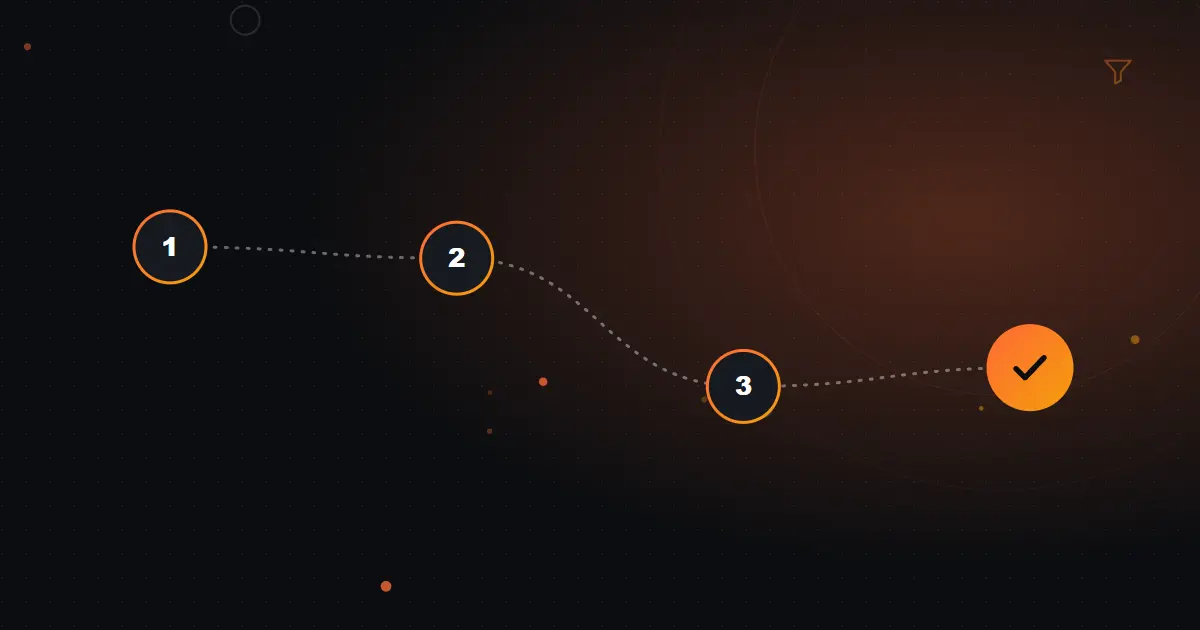
A lead funnel in three stages
- Capture with a useful, specific offer
- Nurture with short, relevant messages
- Convert with a clear next step
- Measure qualification and close
Convert
At the right moment, propose the next step: a meeting, a quote, a demonstration, an offer. Make contact easy (phone, calendar, message). Reply quickly. Define what a qualified lead is and pass it to sales with context. Follow through to close.
Speed of response greatly influences conversion.

Someone not yet ready to buy is not a no; they are a not yet.
Measuring on a short budget
Measure cost per lead, qualification rate, meeting rate and close rate. Start with one channel and one offer, and only then add. Reuse what works. Remove steps nobody uses. Keep the funnel simple while the budget is small.
A simple, followed funnel beats a complex, abandoned one.
Decision table
| Stage | Objective | Indicator |
|---|---|---|
| Capture | Obtain qualified contacts | Cost per qualified lead |
| Nurture | Resolve doubts and build trust | Open, reply, advancement |
| Convert | Propose the next step | Meeting or purchase rate |
| Review | Learn from each stage | Losses per stage |
Common mistakes to avoid
- Capturing without a follow-up plan. Leads cool down and money is lost.
- Sending communication without a legal basis. Inform and have consent when necessary.
- Measuring only cost per lead. It does not show quality or final conversion.
How to measure the result
Track, by stage, cost, advancement rate, time to reply and cost per meeting or sale.
Limits and exceptions
With few leads, variability is high and conclusions fragile. Lead quality depends on sector, offer and price. Avoid over-automating before validating the process manually, and always respect the wishes of those who ask to stop receiving communications.
Illustrative example
Illustrative example: a consultancy offers a free guide, collects name and email with consent and sends three useful messages over two weeks, ending with an invitation to a diagnostic conversation. It measures reply and booking rates, and adjusts the content. With a small budget, it concentrates everything on a single offer.
In practice: checkpoints
Record times and pass-through rates between stages, and improve first the one that loses the most leads per euro spent. Keep the offer, the follow-up messages and the closing step consistent, review replies by hand, and keep the sequence honest and short. Use simple tools at the beginning and add automation only when the process proves itself, so the budget goes to leads and not to software you barely use.
Frequently asked questions
Do I need all three steps?
If the cycle is long, yes. For quick decisions, it can be shorter.
What offer do I use to capture?
Something useful and tied to the customer’s problem.
How long do I nurture?
It depends on the cycle. Generally weeks, with short messages.
How many messages in nurturing?
Few and useful; three to five is usually enough to start.
Do I need expensive tools?
Not necessarily; start simple and invest when the process is validated.
On a limited budget, focus on one offer, a short, useful sequence and a clear conversion step, measuring each stage and respecting consent rules.
Sources and recommended reading
Last editorial review: October 2026. Informational content; always confirm current conditions in the official sources before deciding.