
Testing creative takes money, but not as much as people think. With a minimal, disciplined design you can learn on a short budget: few hypotheses, one variable at a time, metrics defined in advance and the patience not to conclude early.
The essentials in a definition
Creative testing on a short budget needs a minimal design that still teaches: few variants, a single variable, equal budget, defined duration and a metric tied to the business. Instead of testing many ideas with little data, it is better to test few with enough data. Meta’s testing tools, conversion measurement and studies such as those from Think with Google support the design.
The common mistake
Launching ten creatives on a budget for two, looking at the results after two days and picking the winner. With little data, any difference is noise. The outcome is deciding by luck and believing it was strategy.
Fewer, better-thought-out tests teach more than many badly fed ones.
The minimal design
Choose one clear hypothesis (“showing the price at the start raises lead quality”). Create two versions that differ only in that. Define the budget, the duration and the decision metric. Publish under equal conditions.
If you have budget for two versions, test two, not five.
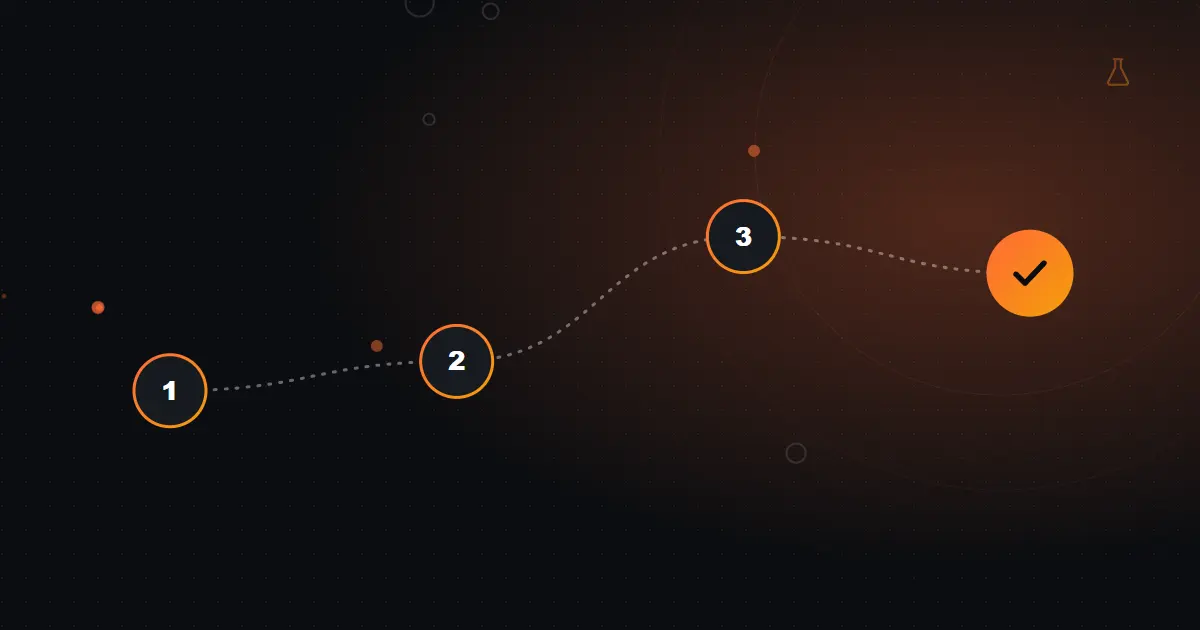
A creative test on a short budget
- Choose one clear hypothesis
- Create two versions that differ in one variable
- Define volume, duration and metric
- Record and plan the next test
How much data is enough
Define in advance a minimum volume (for example a given number of conversions per version) and a minimum duration that covers weekly cycles. If you cannot reach the volume, extend the test or use a more frequent intermediate metric, such as retention or quality clicks.
Accept that some tests will be inconclusive. That is information, not failure.

On a short budget, testing less and better teaches more.
Record and accumulate
Note hypothesis, versions, dates, budget, results and decision. Over time the record shows patterns that a single test does not reveal. Reuse what you learned in new creatives.
Plan tests in sequence: each builds on the last.
Decision table
| Element | Rule | Example |
|---|---|---|
| Variants | Two to three | Two different angles |
| Variable | One per test | Change only the hook |
| Budget | Equal per variant | Split evenly |
| Duration and metric | Defined beforehand | Two weeks; cost per qualified lead |
Common mistakes to avoid
- Testing five things at once. You do not know what caused the difference.
- Picking the winner early. The first days mislead; respect the duration.
- Measuring only clicks. Cheap clicks may not generate customers.
How to measure the result
Define the hypothesis, main metric, budget per variant and decision criterion before launching; at the end, record what was learned and the next test.
Limits and exceptions
Short-budget tests have limited power: they only detect large differences and may be inconclusive. That does not make them useless, but it means testing ambitious changes instead of small variations. Avoid drawing conclusions about different audiences or seasons from a single test, and repeat before generalising. Accept that part of the test budget is a learning cost.
Illustrative example
Illustrative example: a shop with a 300-euro test budget compares two ad angles for two weeks, 150 euros each, with the same page and audience. It measures cost per purchase and order value. One angle shows better performance, and the shop decides to repeat the test with another audience before scaling. The small test avoided a blind bet.
In practice: checkpoints
With a short budget, test one big difference at a time, such as the angle, rather than small details. Run each version long enough to collect a minimum number of clicks or conversions defined beforehand, write down what you learned and use it in the next round. Reuse winning ideas in new formats, and stop testing when the cost of the test exceeds the value of what you could learn.
Frequently asked questions
How much should I spend on a test?
Enough to reach the minimum volume you set. If you cannot, simplify the test.
Can I test several creatives at once?
With little budget it is better to test few, so each has data.
What if it is inconclusive?
Record it, learn and plan a new test with another hypothesis.
How much should I spend on a creative test?
Enough for each variant to get useful data for the chosen metric; fewer variants allow testing with less.
What if none is better?
Record the result, and test a different angle instead of small variations of the same one.
On a short budget, test two to three variants, one variable, equal budget and defined duration, and measure a metric tied to the business.
Sources and recommended reading
Last editorial review: October 2026. Informational content; always confirm current conditions in the official sources before deciding.