
Click-to-message ads take the user from an ad directly into a message, in Meta’s messaging apps. They convert well when the business replies fast and knows how to lead the conversation. Without a quick reply or script, the conversation dies and the budget is lost.
The essentials in a definition
Conversation ads on Meta lead the user to start a conversation (Messenger, Instagram or WhatsApp) instead of going to a page. They work well when there are pre-purchase questions and capacity to reply fast. Consult Meta’s ad options and the WhatsApp Business documentation, and handle data in line with the GDPR.
When they make sense
Personalised services, products that require questions, local businesses, higher-consideration sales, customers who prefer the informal channel. Less suited to simple purchases where checkout is faster than chatting. Define the goal: conversations, qualification, bookings or sales.
The conversation must have a purpose.
Prepare the reply
Set up opening messages, quick replies, qualifying questions and hours. Use moderate automatic replies to manage waiting, without replacing human attention. Define who replies, within what time and how it escalates to sale or booking. Respect messaging policies and privacy.
The first reply decides interest.
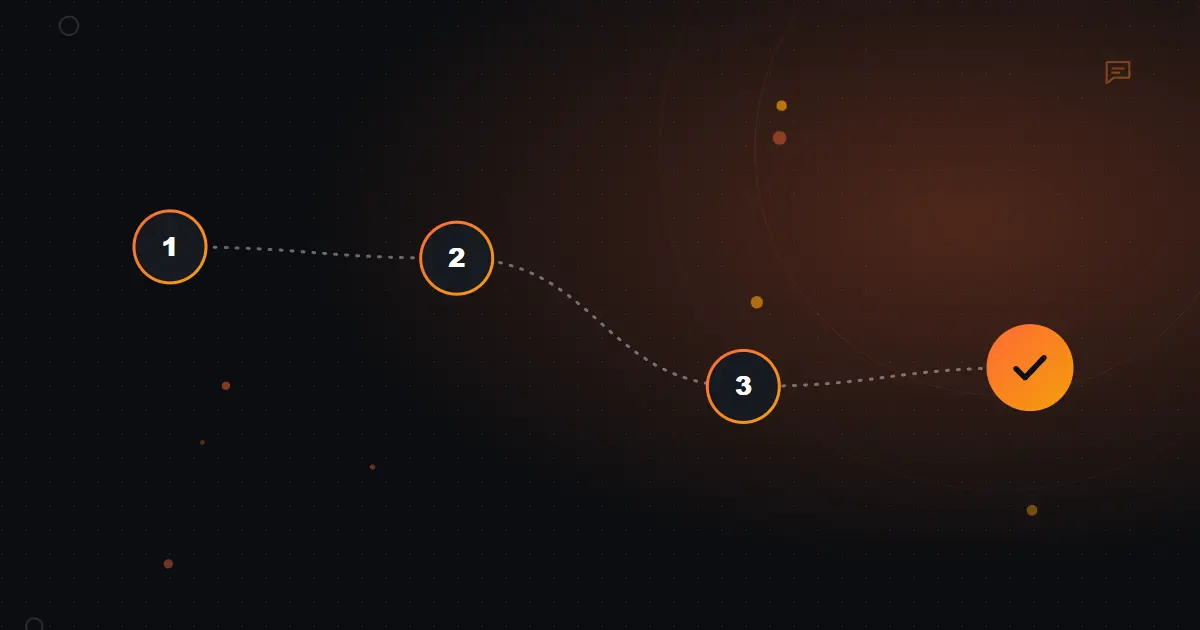
Click-to-message ads: from click to conversation
- Define the purpose of the conversation
- Prepare quick reply and script
- Lead with simple questions and a next step
- Measure qualification and sales
Lead the conversation
Ask simple questions, one at a time. Show how you can help and give clear options. When there is intent, propose the next step: quote, booking, call, payment. Do not force the sale; offer usefulness. Record the conversation and outcome, and attribute it to the campaign.
Conversing is qualifying, not pressuring.

In a click-to-message ad, the sale begins when someone replies.
Measure
Measure conversations started, qualified, bookings and sales, and first-response time. Calculate cost per qualified conversation and per sale. Compare ads and audiences by conversation quality. Optimise for deeper events when there are data.
Conversations without records do not let you learn.
Decision table
| Element | Good practice | Risk |
|---|---|---|
| Opening message | Simple, useful question | Long, vague text |
| Reply | Minutes, within hours | Delay |
| Automation | For the basics, with access to a person | Rigid replies |
| Measurement | Conversations, qualification and sales | Only messages started |
Common mistakes to avoid
- Advertising without reply capacity. Conversations go unanswered.
- Measuring only conversations started. It does not show results.
- Asking for data too early. It drives the user away.
How to measure the result
Track conversations started, response time, bookings and cost per booking.
Limits and exceptions
Features and rules change and vary by country. Conversation quality depends on the team. Test at small scale before scaling.
Illustrative example
Illustrative example: an aesthetics clinic uses ads with a conversation destination and an opening message with two options (treatment and availability). It replies within minutes during stated hours and records bookings. It compares cost per booking with the form.
In practice: checkpoints
Define who replies, during what hours, and what happens outside them, and test the flow before switching on the ads. Record the most frequent questions and turn them into quick replies and website content. Measure time to first reply, the percentage of conversations that become bookings or sales and the cost per qualified conversation. Review a sample of conversations weekly, to correct errors and improve the script. Make sure the opening message matches the ad, ask permission before sending anything promotional afterwards, and give customers an easy way to stop messages. Where volume is high, set up routing by topic, so the right person answers, and keep a human option for complex or sensitive questions.
Frequently asked questions
When should I use click-to-message ads?
For personalised, local or higher-consideration services.
Can I automate replies?
In part, keeping human attention for those showing interest.
How do I know it works?
By measuring qualified conversations, bookings and sales.
When is it preferable to a landing page?
When the customer has questions and values a personal reply.
Do I need a dedicated team?
It depends on volume; plan coverage before switching on ads.
Use conversation ads when there is capacity for fast replies, a simple opening message, clear consent and measurement through to sale.
Sources and recommended reading
- Meta for Developers: WhatsApp Business
- Meta: advertising standards
- General Data Protection Regulation (GDPR)
Last editorial review: October 2026. Informational content; always confirm current conditions in the official sources before deciding.