Three recent studies suggest AI platforms send a minimal fraction of Google’s traffic and conversions, and other measurements of position data vary between under 1% and 27%. Given this, whoever sells you “AI visibility” with guaranteed results is selling a narrative. Ask how they measure, with what samples, with what cases in Portugal and what happens if nothing changes.
What's known, in October 2026
The available data is limited. Marie Haynes, with 12 months of GA4 across 100 sites, found ChatGPT sessions are 0.62% of Google organic volume, with Google generating 96.5% of conversions. SEO Works found 39 times more Google traffic than AI assistant traffic. Kevin Indig, with 12 sites, found no reliable relationship between AI visibility and brand or direct traffic.
Samples are small and the authors admit the absence of a relationship isn’t proof of no effect. It’s uncertain terrain, and anyone claiming to know exactly how it works is going beyond the data.
Promises to avoid
“We guarantee your brand appears in ChatGPT.” Nobody controls an AI system’s answers. “We’ll double your AI traffic in 90 days.” AI traffic, today, is a minimal fraction; doubling a minimal fraction is little. “AI positions rose X%.” Measurement tools have reported errors between under 1% and 27%. “If you don’t invest now, you lose to competitors.” Pressure without data.
All share the same flaw: certainty where there’s no data. In a changing market, certainty is the alarm sign.
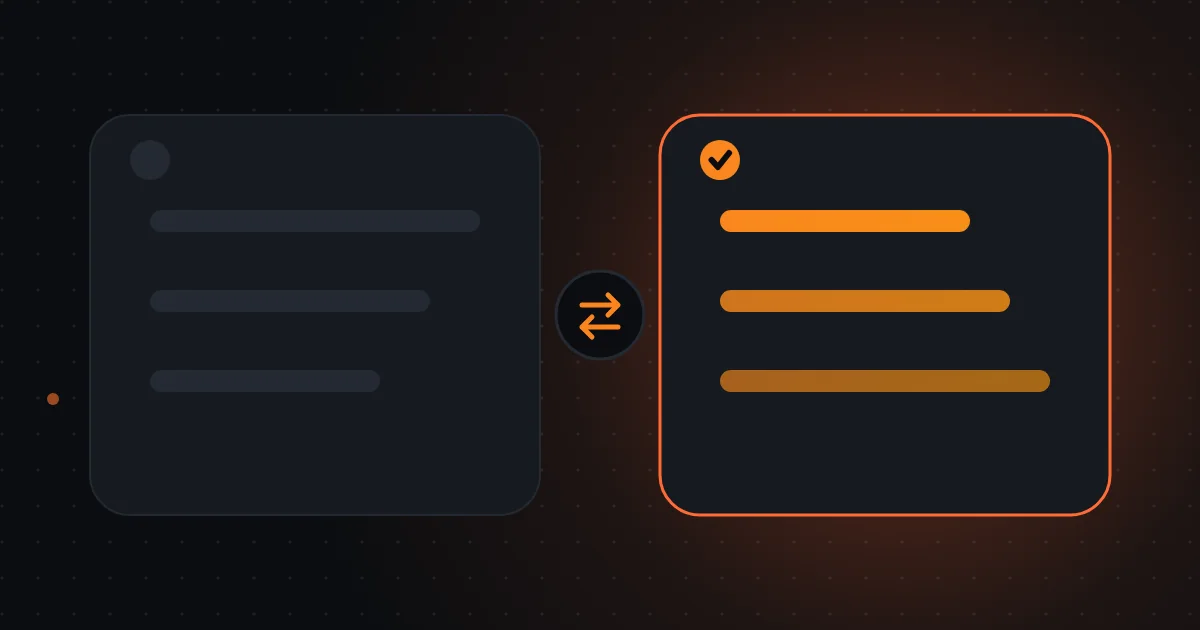
Promise vs serious proposal
Promises to avoid
- We guarantee you appear on ChatGPT
- We double AI traffic in 90 days
- AI positions rose X%
- If you don’t invest now, you lose
Serious proposal
- Cites sources and dates
- Small test, with metric and deadline
- Admits the effect may be nil
- No long lock-in without proof
Ten questions to ask before paying
- How do you measure AI visibility, and with what tool? 2. What data do you have on traffic and conversions that came from AI? 3. On which sites and with what sample? 4. Any case in Portugal, in Portuguese? 5. Which results are guaranteed and which are hypotheses? 6. What part of the budget do you propose and why? 7. What do you do if nothing changes in three months? 8. How do you separate AI’s effect from other factors? 9. What risks exist? 10. How do I exit, if it doesn’t work?
The answers say whether you’re facing method or marketing. Ask for them in writing.
Signs of a serious proposal
It cites sources and dates, distinguishes fact from hypothesis, proposes a small test with metric and deadline, and admits the effect may be nil. It links AI visibility to something measurable (enquiries, conversations, sales), not just mentions. It doesn’t ask for a long lock-in for a service without proof.
It also explains what already makes sense without AI: clear content, good product data, complete business profiles, reviews, fast pages. Much of what serves AI serves traditional search, and that’s where investment is least risky.
In a changing market, certainty is the alarm sign.
What you can do without paying anything
Make a list of the 20 questions your customers ask before buying. Write clear answers, with facts, on your site. Ensure the company’s Google profile is complete and contact details are correct everywhere. Ask satisfied customers for reviews. Measure traffic sources and record when a customer says they found you through an AI assistant.
None of this requires an agency, and everything is useful even if AI changes course. It’s the solid base on which any optimisation service, if it exists, should build.
A proportionate test, if you want to proceed
Set a small ceiling (for example the equivalent of a month’s service), three months’ duration and a metric that isn’t “mentions”: attributable enquiries, assistant conversions in Analytics, customer remarks citing AI. Define beforehand what counts as success and how to decide to stop.
If, after three months, there are no measurable signs, stop without guilt. You learned at low cost that, for your business and at this moment, the channel doesn’t pay.
My position on this topic
I don’t sell “AI visibility”. I work with Google Ads, Meta Ads and Microsoft Advertising, with measurement, reports and transparency, and I follow AI channel changes to tell clients frankly whether testing makes sense. I say what’s known, what isn’t and what I’d test, with small budgets.
If an agency proposes this service to you and you want a second opinion, you can send me the proposal. I’ll tell you what I’d change, with no commissions or middlemen.
How to compare two AI optimisation proposals
Make a table with the ten questions and a column per proposal, and score 0 to 2. Add rows for: price, minimum term, exit conditions, promised reports and proof presented. The proposal with most points and fewest absolute promises is, as a rule, the most serious.
If none passes, postpone the decision. In a terrain with so much missing data, waiting three months costs little and brings much advantage: there will be more studies, more cases and better measurement tools.
Frequently asked questions
Is AI visibility a scam?
Not necessarily. But measurement is hard and AI traffic data is small. The problem is promises of guaranteed results.
Should I ignore AI?
No. Follow it, prepare good content and product data, measure and test small when it makes sense.
What does a service like this cost?
There are no reliable reference prices for Portugal. Compare scope, proof and exit conditions, not just the price.